
RingCentral and the Statler Hotel Phone System Overhaul
The Statler Hotel faced a unique and high-stakes challenge: overhauling an aging telephone system without sacrificing guest service.
This article applies to: RingCentral
Cornell’s Statler Hotel faced a critical challenge: replace an aging phone system without disrupting the personalized service that defines its AAA four-diamond reputation. The solution required more than new hardware—it demanded collaboration across Cornell's local and central IT teams and external partners to adapt new enterprise services for a hospitality environment with no ready-made blueprint.
On-Property Phones Still Matter in Luxury Hotels
- The speed dial buttons of in-room phones provide direct access to the Front Desk, Housekeeping, and other key hospitality staff for registered hotel guests.
- Caller identification underpins 911 services for hotel guests as well as the hotel's personalized services. A hotel's Property Management System navigates complex Caller ID rules that integrate these details with privacy protections like clearing voice mail messages upon checkout.
The Challenge of a Tight Timeline and No Ready Solution
- Cornell had transitioned from a legacy telephone system to RingCentral across the campus, but the hotel's Property Management System remained dependent on the legacy phone infrastructure and a private branch exchange (PBX).
- The PBX and Property Management System were deeply integrated with guest services and business operations.
- No off-the-shelf solutions existed for the triad of interconnected hospitality phone, guest service, and business operations.
- End-of-life deadlines for the PBX hardware, network infrastructure, and a third party solution already "on the margins" increased the possibility of an extended outage, further adding to the urgency for a RingCentral transition.
- Shifting the infrastructure, business operations, and physical devices in each hotel room needed to be accomplished without negatively impacting the guest experience, but the hotel enjoys a steady stream of travelers year-round. Only three days in December could be utilized for the change.
Two Phases Lead to Smooth Transition
- October 2024-May 2025: disconnect the onsite PBX from the legacy phone system and reconnect to RingCentral for dial tone.
- June 2025-December 2025: install modern, enterprise-supported networking infrastructure throughout hotel property; replace onsite PBX with DuVoice to connect the hotel's Property Management System to RingCentral; replace phone hardware in business offices and guest rooms.
Leaning into Multiple Partnerships for Project Success
- Teams from SC Johnson College of Business Information Technology and Cornell Information Technologies (sometimes called Central IT) collaborated to solve the migration of co-dependencies: hotel phones, guest services, and business operations. RingCentral would serve as the foundation upon which to build.
- The SC Johnson College of Business IT team brought deep knowledge of their local environment, translating hotel business and leadership needs into problems they and their partners could triage and solve through daily conversations.
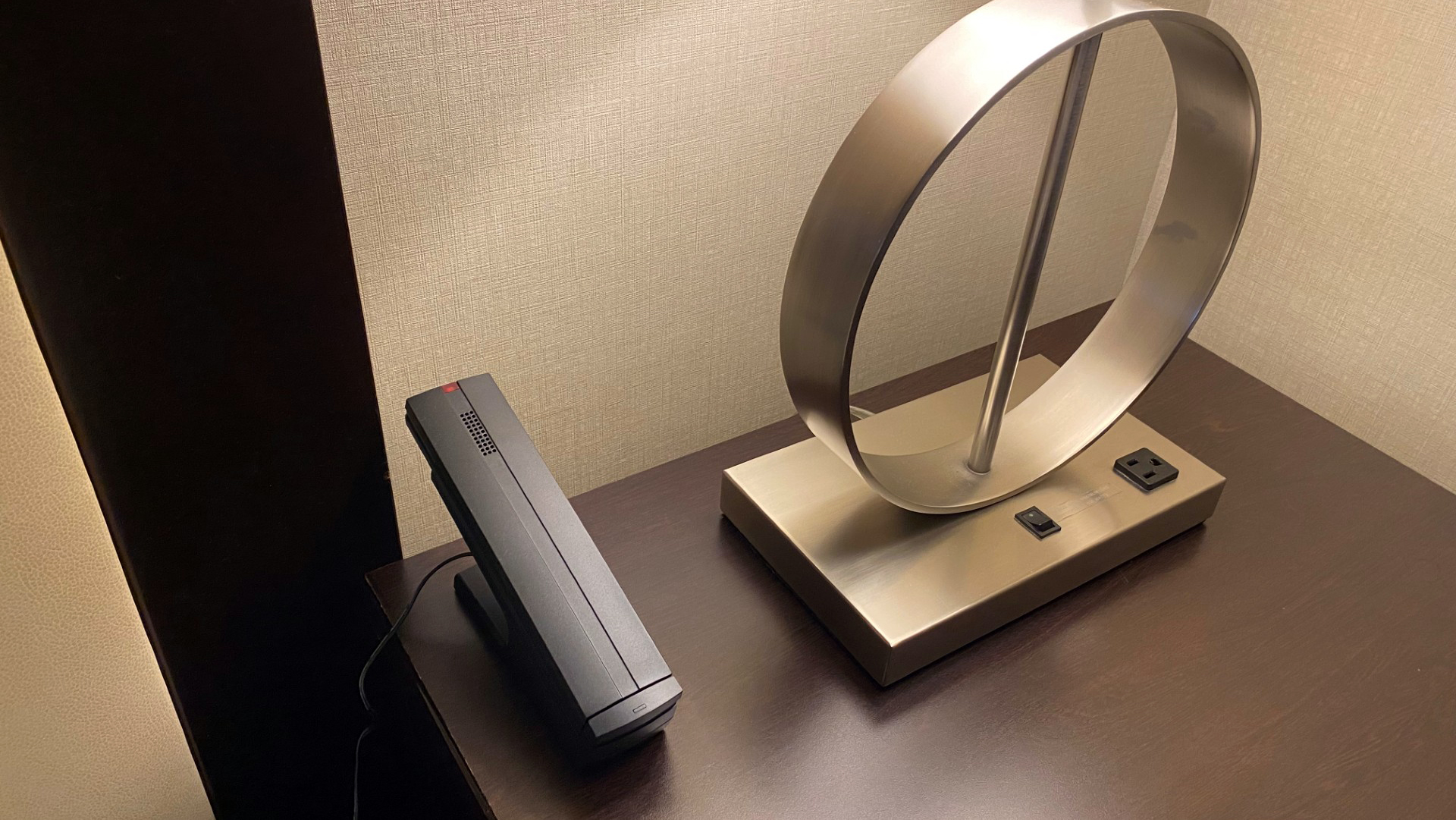
- Within CIT's Enterprise Network Services organization, the Network Engineering, Voice Engineering, Field Services, and Infrastructure Engineering teams worked to evolve and adapt both internal and external solutions to meet the hotel's needs, such as adopting the next generation of RingCentral phone hardware for business offices and identifying Bittel cordless phones for guest rooms.
- The Statler Hotel's Operations team managed occupancy to provide the three-day window in which technicians could install new phones in each of 153 guest rooms. Over 250 phones were installed in the hotel's rooms and offices.
- RingCentral's technical support staff joined campus-wide conversations, offering advice and researching options used in environments similar to the Statler Hotel.
- Allbridge support staff helped with the transition of the hotel's onsite PBX and networking infrastructure.
- AudioCodes supplied necessary middleware, connecting the onsite PBX to RingCentral in Phase 1.
- Infor and their Hospitality Management Solution (HMS) helped maintain functionality for the hotel's Property Management System.
- Connecting HMS to RingCentral for hotel services like guest voicemail was made possible thanks to DuVoice software.
- The sleek Uno Pro guest room hardware is manufactured by Bittel.
Celebrating Success
The successful conclusion of the Statler Hotel's phone system overhaul was celebrated internally by the individual teams and shared with their colleagues across campus through several news channels.
At the helm of the transition sat Diane Kubarek, IT Project Manager and Business Analyst in the SC Johnson College of Business. While orchestrating a symphony of vendors, stakeholders, and technical details and dependencies, she continued to prioritize the hotel’s focus on their guest experience.
"People always asked, 'Why are you even doing this?' when they heard me talk about hotel phones," said Kubarek with a laugh.
In an era dominated by smartphones and AI agents, in-room phones remain essential for luxury hotels' registered guests. Touching a single button on their in-room phone connects guests with hotel staff in service centers throughout the property.
“When a guest checks in, our Property Management System records details to provide on-site personalized services,” said Kubarek. "Our in-house phone system can also provide critical details for 911 and other emergency services while blocking outbound Caller ID details. But this outbound caller ID blocking means the hotel’s business phones must be on the same system as the room phones and the Property Management System."
Kubarek, who retired shortly after the hotel's new phone solutions were in place, said the project’s biggest success was the seamless collaboration among multiple organizations under intense time pressure.
"RingCentral engineers confirmed this was a technically unique transition with no existing blueprint, and the timeline was far shorter than typical projects," she said. "Vendors fast-tracked stages, provided troubleshooting on short notice, and worked hand-in-hand with our IT teams. The Statler Hotel's Operations Team managed occupancy so technicians could install phones in each of 153 guest rooms in under three days. CIT adapted services, supported next-generation RingCentral hardware, and deployed approximately 250 phones. The result: minimal disruption to hotel operations and a fully modernized system."
Comments?
To share feedback about this page or request support, log in with your NetID