
Emerging Tech Dialogues - The Future of Work II: Shaping What’s Next!
Informed by Resilient Cornell, the CEMI project, and the best thought about change across Cornell, The Future of Work II: Shaping What’s Next will provide the setting for conversation and connection. You and peers from across the Cornell community can consider where we’re going and how we’ll get there.
This article applies to: Emerging Tech Dialogues
Pursue Your Curiosity!
Date and Location
In person at Statler Hall on the Ithaca Campus or virtually via Zoom on April 1, 2026, from 9am to 4pm. For onsite attendees, registration and coffee start at 8:30.
Schedule
Videos
View videos of the keynotes and sessions online.
Morning and Afternoon Remarks, Panel Facilitator
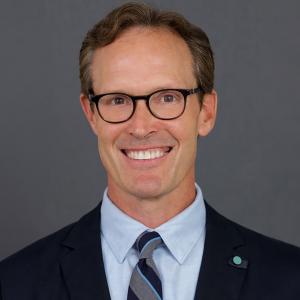
Ben Maddox, Chief Information Officer
Ben Maddox earned his doctorate in higher education management from the University of Pennsylvania, his M.A. in education and cognitive science from New York University, and his B.A. in political science from Baylor University. In addition to his role at Cornell, he is also an adjunct instructor and doctoral advisor at New York University's Steinhardt School of Culture, Education, and Human Development. His academic work focuses on intersections of systems: people, organizations, and technology --particularly how technology, innovation, leadership, and learning fuel change. Prior to his role at Cornell, Maddox served as NYU's chief academic technology officer, capping off his 13 years in leadership roles for NYU's New York and Abu Dhabi campuses.
Afternoon Keynote Speaker

Susan Youngblood
Susan Youngblood is an advisor to C-suite leaders and boards on AI strategy, specializing in helping organizations accelerate the adoption of GenAI and other disruptive technologies. She is an Operating Advisor to Bessemer Venture Partners, where she advises their portfolio companies on AI and workforce strategy.
Susan has served as Chief Human Resources Officer of two tech companies and held senior executive roles at IBM, Bank of New York Mellon, and the London Stock Exchange Group, where she embedded AI and robotic process automation into global operations. She is a keynote speaker and lecturer at Columbia and Cornell Universities on AI and the future of work.
Susan holds a Master of Industrial and Labor Relations from Cornell’s ILR School, serves on the ILRAA Alumni Board of Directors, PCCW, and Cornell Council, and was the assistant coach of Cornell’s women’s tennis team.
Morning Keynote Panel
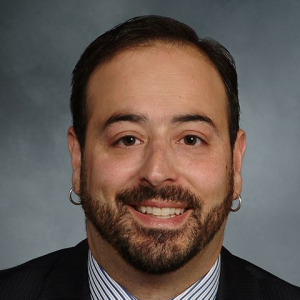
Doug Cohen, Weill Cornell Medicine Director of Educational Computing
Doug Cohen has over 25 years of experience in higher education technology strategy, project management, and organizational change. He is also an Adjunct Lecturer at SUNY Polytechnic Institute and holds a Master’s degree in Information Design and Technology from SUNY Institute of Technology.
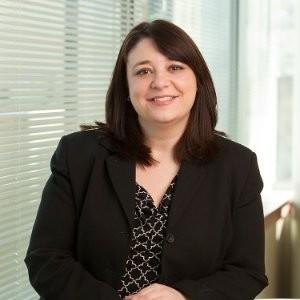
Laura Landphair, Johnson College of Business Executive Director of Information Technology
An IT professional with a history of implementing CRM and data analytics solutions in higher education, Laura Landphair leads a dynamic and diverse team that drives innovative technology solutions to support 21 degree programs, 3,200 students, more than 700 faculty and staff, and a four-diamond hotel property with multiple food and beverage outlets. The team’s portfolio includes client services, classroom technology, enterprise systems, custom development, project management, infrastructure, security, and research, and spans multiple locations in Ithaca and New York City.
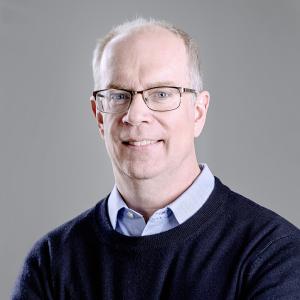
Rob Vanderlan, Executive Director of Center for Teaching Innovation
Dr. Robert Vanderlan has been with the Center since its founding in 2017 and has worked in faculty development for more than a decade. He has led teams that offer instructional design support for faculty, co-designed the Center’s New Faculty Teaching Academy, provided instructional design expertise for a range of Cornell’s edX massive open online courses, and helped guide the Center’s response to COVID-disrupted teaching.
Uniting his work in faculty development and history are interests in how individuals can seek meaningful work and advocate for change in institutional settings, and a commitment to higher education as a protector of engaged, democratic citizenship.
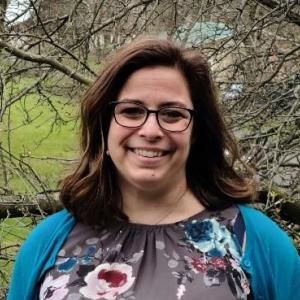
Tanya Grove, Interim Director of Organizational Development and Effectiveness
Tanya Grove is the Assistant Director and Senior Management Consultant in Organizational Development and Effectiveness. In her role, she provides facilitation, training, and consulting services in leadership development, organizational redesign, process improvement, change leadership, team building, executive coaching, and strategic planning. Tanya is a certified Prosci® Change Practitioner and trainer, and XCC executive coach. She has an executive master’s degree in Human resources from Cornell University College of Industrial and Labor Relations and a B.S. in Arts Administration from Ithaca College.
Afternoon Keynote Panel
Susan Youngblood
Susan Youngblood is an advisor to C-suite leaders and boards on AI strategy, specializing in helping organizations accelerate the adoption of GenAI and other disruptive technologies. She is an Operating Advisor to Bessemer Venture Partners, where she advises their portfolio companies on AI and workforce strategy.
Susan has served as Chief Human Resources Officer of two tech companies and held senior executive roles at IBM, Bank of New York Mellon, and the London Stock Exchange Group, where she embedded AI and robotic process automation into global operations. She is a keynote speaker and lecturer at Columbia and Cornell Universities on AI and the future of work.
Susan holds a Master of Industrial and Labor Relations from Cornell’s ILR School, serves on the ILRAA Alumni Board of Directors, PCCW, and Cornell Council, and was the assistant coach of Cornell’s women’s tennis team.

Paul Krause, Vice Provost for External Education and Executive Director of eCornell
Paul Krause leads the university-wide effort to extend Cornell education to non-traditional students. He collaborates with academic units and faculty to plan and manage both open enrollment and custom learning programs. Cornell’s professional programs support lifelong learning for individuals who are interested in career advancement or pursuing academic interests. They also support organizational goals for workforce learning and development.
Breakout Sessions
How to prepare your application for a major change.
Jay Hulslander: Kuali Engineer – CIT Infrastructure
When there is a major change affecting your application, there are many items to consider. In this presentation we will share some high-level items for you to think about. If you are just starting to think about how to change your system to prepare for a change, you will walk away with items to consider. If you already have a plan, please come and share your ideas. Perhaps you will find some new items to think about.
Practical Strategies for Managing Constant Change
Tanya Grove: Interim Director of Organizational Development and Effectiveness
Doug Cohen: Director, Educational Computing, Weill Cornell Medicine, Adjunct Lecturer, Suny Polytechnic Institute
Change today is continuous, overlapping and often unpredictable. This session will focus on practical strategies for navigating ongoing change. Together we will explore how constant change affects individuals and teams. This session focuses on simple, practical ways individuals can stay grounded and effective in this fast‑moving environment. We will discuss strategies to manage stress, stay flexible, when everything around you is shifting. By the end, participants will leave with concrete takeaways participants can apply immediately to support resilience, alignment, and adaptability in their work.
Why Didn't Anyone Tell Me? The Future of Work Announcements
Laurie Hemmings: CIT Communication & Documentation, Assistant Director
Carlyn Chatfield: CIT Communication & Documentation, IT Technical Communicator
Shelley Stuart: CIT Communication & Documentation, Communications
For anyone who missed an important update, this breakout session provides the opportunity to brainstorm gaps in sending and receiving work announcements. This interactive discussion immediately engages the participants in sharing their most memorable work announcements and imagining how favorite newsletters, cartoons, and other channels can inspire ideas to improve Cornell’s internal communications.
Participants may see the group’s most effective ideas show up in the IT News, CIT Spotlights & Transitions, and the CEMI Quarterly Report.
Reboot Required: Stories from Repeat Career Reinventors
Jason Woodward (Facilitator): IT Business Analyst IV, SC Johnson College of Business
Carlyn Chatfield: CIT Communication & Documentation, IT Technical Communicator
Will Olson: Applications System Analyst, SC Johnson College of Business
Bob Talda: Systems Engineer, CIT Infrastructure
Aviana Cooper: Assistant General Counsel, Weill Cornell Medicine
This breakout session explores what prompts a career reboot and what it takes to launch one successfully. Facilitated by Jason Woodward, the discussion brings together a panel of Cornell colleagues who have each rebooted their professional lives multiple times. Through candid stories and practical insights, the panelists describe what it means to shut down an old path, power up a new one, and debug the uncertainty that often appears during major transitions. Expect audience participants to contribute additional strategies, lessons learned, and creative ideas for managing reinvention in a constantly changing landscape.
Cross Campus Collaboration
Erica Ellis: Project Manager, CIT Information Technology
Ari Mack, Organizational and Workforce Development
David Nelson, IT Project Coordinator
What if we could design a better model for cross-campus collaboration — together, in real time? In this interactive session, participants will participate in a live Business Enablement workshop focused on designing the Team Up Accelerator — a structured, new approach to improving how teams collaborate across silos and manage cross-campus communications and processes. This accelerator design workshop will:
- Surface communication and collaboration challenges and pain points
- Identify cross-campus use cases
- Map where friction occurs across roles and functions
- Co-design a lightweight, testable model for Team Up using Microsoft Teams
The outputs of this session will help us all figure out how to use Teams to support work and collaboration across Cornell.
Comments?
To share feedback about this page or request support, log in with your NetID