
Latest News
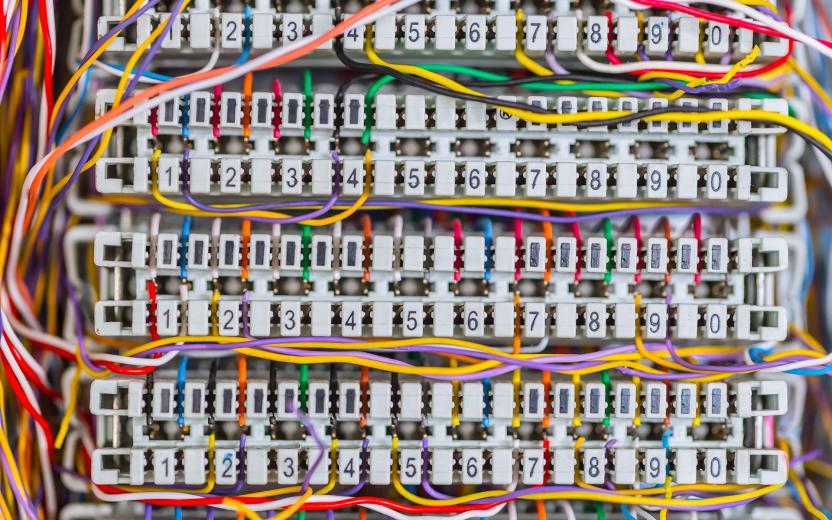
Between the era of telephone operators and the age of smartphones stood a technology few people ever thought about: the campus private branch exchange (PBX). For more than 40 years, Cornell's telephone system quietly connected residence halls, offices, service centers, and emergency responders, adapting to each new generation of communications before its retirement this summer.
On July 31, 2026, Cornell Information Technology's telecommunications team completed the shutdown of the campus Avaya PBX. The milestone marked the end of a communications system that had served the university for more than 40 years, following the construction of Cornell's own telephone network in the mid-1980s. As technology evolved, the PBX adapted from supporting residence hall telephones and office extensions to delivering VoIP services and critical campus communications, remaining a reliable part of university life through decades of change.
Although most members of the Cornell community never interacted directly with the PBX itself, generations of students, faculty, and staff relied on the services it enabled every day.
"The PBX was the backbone of Cornell's telephone services for decades, supporting everything from office phones and residence halls to critical emergency communications," said Tom Ball, Assistant Director of Network and Communications Services. "At its peak, it served over 17,500 phone lines across the university. Retiring the system marks the completion of a multi-year transition to modern cloud-based communications while preserving the reliable services our community depends on."
Building Cornell's Own Phone Network
Cornell's move to a campus-owned telephone system reflected broader changes in the telecommunications industry during the 1980s. As regulations evolved, organizations gained the ability to operate their own telephone infrastructure rather than relying entirely on commercial providers.
"Having your own phone system allowed colleges and universities to operate a fairly successful and reliable service while maintaining greater control over communications," said Paul Viscuso, a longtime telecommunications engineer whose career has spanned much of Cornell's PBX era.
Around 1985, Cornell transitioned away from Centrex service and installed an AT&T System 85 PBX. The project was significant enough that Cornell added a wing to the Cornell Communications Center building to house the equipment.
While the PBX automated much of the call-routing process, Cornell still maintained operators to help connect callers to the right offices and individuals. Responding to a joke about Ernestine, Lily Tomlin's famous fast-talking telephone operator, Viscuso laughed.
"Our phone operators did not do that," he said. "Calls that came in were simply transferred to the correct individual or office. We still have a switchboard group, although that era of physical switchboards is long, long gone."
Over the following decades, the PBX evolved alongside the telecommunications industry. The technology passed from AT&T to Lucent Technologies and eventually to Avaya, while Cornell continually adapted the system to meet changing campus needs.
Adapting Through Decades of Change
The PBX supported a period of dramatic transformation in how people communicated.
When Voice over Internet Protocol technologies emerged in the early 2000s, Cornell evaluated and deployed new capabilities while continuing to maintain traditional telephone service. At one point, VoIP phones represented approximately 25% of the university's telephone inventory.
At the same time, mobile phones were changing campus communications habits. As cell phones became nearly universal, demand for residence hall telephones steadily declined. In 2009, Cornell began reducing and removing most dormitory phone services, reflecting a shift already underway across higher education.
Despite those changes, Viscuso said the PBX remained remarkably adaptable.
"The Avaya PBX and its predecessors gave us a lot of flexibility for phone needs, as well as control over call routing when there were issues with various service providers," he said. "We were able to satisfy almost all phone requirements with the PBX over the last 40 years."
For several generations of students, dorm-room telephones were a cornerstone of campus life, serving as their primary connection to family and friends beyond Cornell until smartphones became ubiquitous.
Supporting Emergency Communications
The PBX era also coincided with major advances in campus public safety communications.
In 1996, Cornell launched its own 911 system for Cornell University Police. By 2001, nearly 100 blue light emergency phones had been installed across campus. Over time, emergency telephones expanded beyond outdoor locations into campus buildings.
Today, nearly 1,300 emergency phones serve the Cornell community. While the university's emergency communications platform has evolved into a modern Vesta system, campus telephone infrastructure continued to play an important supporting role throughout that transition.
From Hardware Rooms to the Cloud
Cornell's PBX supported many dependent services for decades, but usage gradually declined as mobile devices, remote work, and cloud-based communications services became standard.
In the spring of 2020, the university signed a contract to migrate telecommunications to RingCentral, a cloud-based communications platform delivering calling, messaging, and collaboration tools through desktop and mobile applications. The initial rollout accelerated during the COVID-19 pandemic, when large numbers of students, faculty, and staff suddenly needed reliable communications tools while working remotely.
"Lack of PBX upgrades led us to the decision to move in a different direction," Viscuso said. "When COVID arrived, we quickly deployed hundreds of softphones to support employees working from home and enabled calls to desk phones to ring on personal devices. The transition helped prepare the university for a more flexible communications environment."
While many users moved quickly to the new platform, some specialized environments required additional planning. Earlier this year, Cornell's Statler Hotel completed a complex transition from its aging PBX-based phone infrastructure to a RingCentral and DuVoice solution designed to preserve the hotel's guest service experience. The project illustrated how deeply embedded PBX technology remained in certain operations even as the university moved toward cloud-based communications.
The RingCentral migration marked a significant change from the hardware-based systems that had served Cornell for decades. Features that once depended on dedicated equipment in university facilities can now be delivered through cloud services and mobile devices.
The End of an Era
"Most members of the Cornell community will never notice that the PBX is gone, and that's actually a measure of the project's success," Ball said. "Our goal was to deliver a seamless transition while maintaining the communications services people rely on every day."
For more than four decades, the system quietly did its job, connecting people whenever they picked up a phone. It carried conversations between students and parents, linked offices and service centers across campus, and helped route emergency calls when help was needed most.
As Viscuso reflected, the technology itself was never the point.
"The era of switchboards is long gone," he said. "But for decades, this system quietly connected people across the university. That's really what it was there to do."
Its retirement marks not just the end of a technology platform, but the close of a chapter in Cornell's communications history, from the age of landlines to the era of cloud-based communications.
Comments?
To share feedback about this page or request support, log in with your NetID